This past stretch has been about making every step through Epoch 2 feel more deliberate. I have been tightening the visual identity of the settlement, making research choices carry clearer consequences, and giving the world beyond the settlement a stronger voice of its own.
A technology tree with real weight
I have rebuilt the late Epoch 2 research progression around technologies that change how a settlement plays, rather than serving as quiet numerical upgrades. Food, trade, prestige, animals, farming, ceremony, and defence now create more distinct paths, with clearer previews of what each choice unlocks.
The research tree is also now available to explore in the browser, with the same visual language and interaction states as the game. You can browse the current interactive technology tree to see how its connections and choices fit together.
Rival clans come alive
Rival clans now have leaders with their own expressions, priorities, memories, and agendas. They react to the real state of the world, share rumours and incidents, and make diplomacy a continuing relationship rather than a sequence of isolated encounters.
This work also lays the groundwork for strategic rivals that can pursue their own ambitions while still feeling legible to the player. First contact, portraits, and clan events have received a presentation pass to make those encounters feel more personal.
Building a culture that lasts
Wonders are becoming a longer-term cultural commitment. I have added milestones, celebrations, rival sanctuaries, diplomacy consequences, and the ability to reclaim stones from captured wonders, so the decision to build one carries through the wider story of a people.
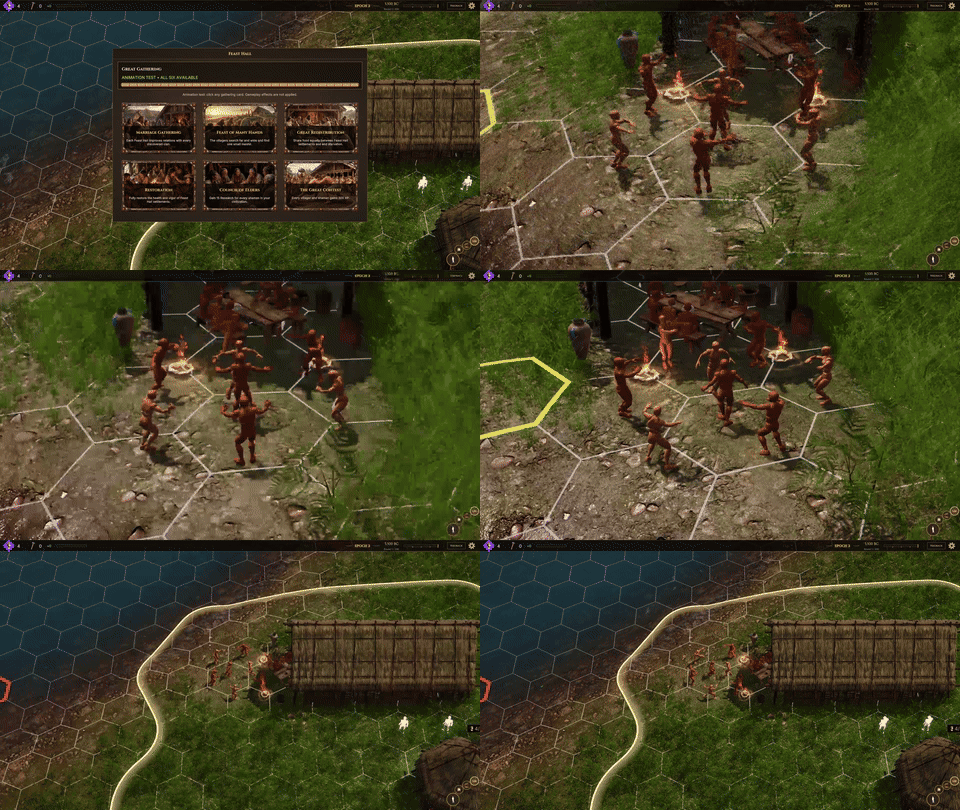
The settlement itself has gained more life around that ambition. Great Gatherings now have staged venues, firelight, council and contest scenes, marriage dances, ambience, and an illustrated Feast Hall menu. New construction stages, working jewellers and workshops, pasture animals, plough teams, and improved ground detail help ordinary work read as visibly as major ceremonies.
Sharper survival choices
I have continued to make scarcity and preparation matter. Wells now serve a clearer role in food infrastructure, strategic resources and stone trade have more presence on the map, and hunting risk makes livestock an emergency reserve instead of a simple stockpile. Dogs, fishing traps, building watch, granary storage, and resource technologies each give a settlement a more specific way to endure.
Alongside these additions, I have polished placement, staffing, delivery routes, selection feedback, territory borders, research cues, animal movement, and several interaction edge cases. The goal remains simple: every new option should change the decisions in front of you, and those decisions should be easy to understand in the world.
For the first time, I was able to sit down and play a real stretch of the game rather than a single system in isolation. I only made it about a third of the way through Epoch 2, but it is already beginning to feel like a complete epoch. Its first full playable version now feels close.