Welcome to the first Humanity Ascends development update. From now on, I plan to share what has been changing roughly every three weeks: the visible additions, the design thinking behind them, and some of the less glamorous work that keeps a long campaign together.
Lately, I have returned my attention to where the whole journey begins. Epoch 2 is still growing, but this cycle has focused more heavily on Epoch 1 and the fragile lives at the start of humanity's ascent.
Back to the first struggle for survival
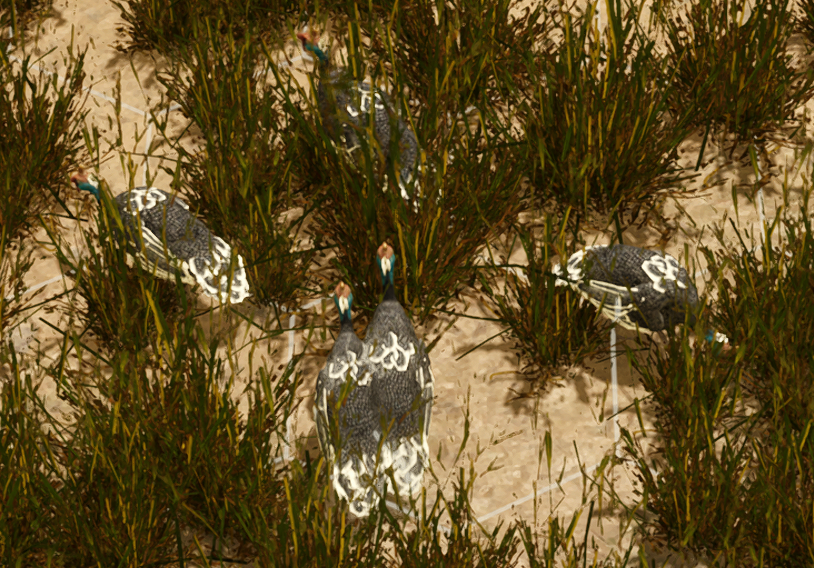
Food is no longer just something waiting to be picked up. Tuber patches now form a complete foraging mechanic, with their occurrence and thirst value tuned to make finding one useful without erasing scarcity. Guineafowl have become a proper hunting opportunity too: flocks land and spread more naturally, react more cleanly to pursuit, and can be grabbed and carried back as food.
The wider survival balance has had another pass as well. The founder begins slightly thirsty, stamina recovery is easier to read, and food, cooked meat, thirst, and tribe growth have been adjusted together. Straight-tusked elephants and rhinos are back in the world, with their attack behaviour corrected so these animals remain creatures to respect rather than convenient targets.
Storms received a small but important touch as well: lightning now flashes before the thunder arrives.
Before there were words
Discovering proto-language now triggers a voiced exchange between the two adults. Their gestures and timing have been animated around the conversation so the discovery feels like an event between people, rather than another technology notification.
This is an early version of the scene, and it gives me a foundation for making major discoveries feel personal throughout the game.
One journey across the epochs
Humanity Ascends is meant to feel like one continuous climb, not a collection of disconnected scenarios. The technology tree now presents the path between epochs more clearly, letting you see how the discoveries of a small hunter-gatherer group eventually lead toward migration, shelter, spiritual life, and permanent settlement.
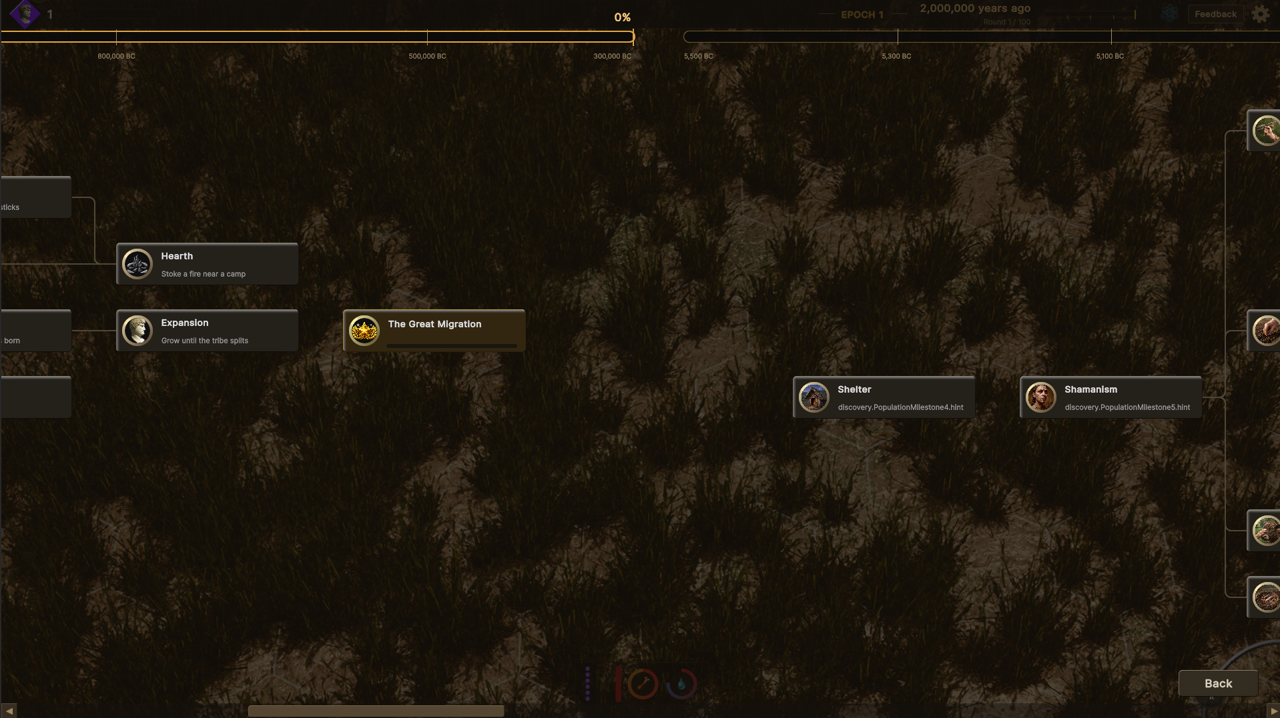
The opening tutorial has also been recomposed and polished to introduce that journey with less friction. Newly available interactions reveal more reliably, hidden information stays hidden until the matching knowledge is found, and the unit panel now reacts immediately when stamina or other state changes.
Epoch 2 remains on the horizon
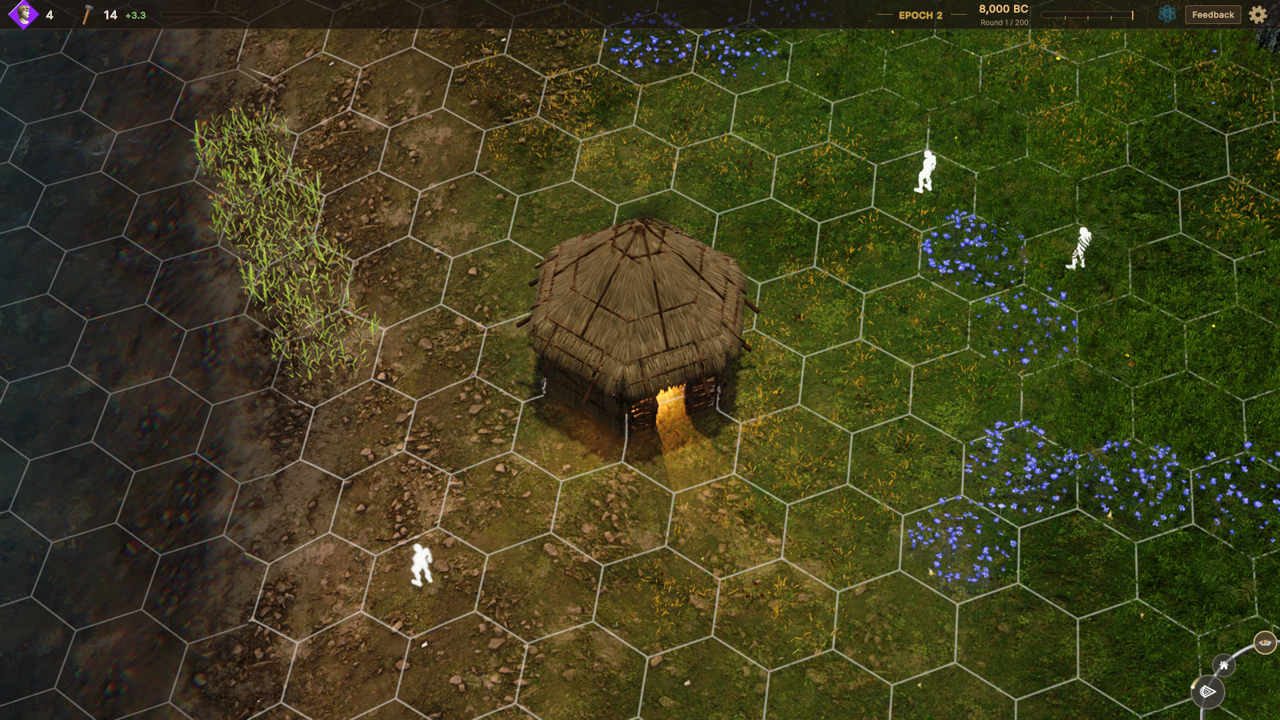
Epoch 2 received a quieter but substantial reliability pass. Rival clans now preserve their raid cadence through saving and loading, strategic turn phases are explicit, and villagers, shamans, trade systems, and rival clan AI report their state changes more consistently. These changes are mostly invisible, but they make longer settlement campaigns safer and more predictable.
Polish around the edges
This cycle also fixes several distracting problems: hovering hexes through the water surface, scorched-earth decals on Epoch 1 terrain, depletion bars returning incorrectly after culling, repeated animal fright reactions, and turn advancement after a failed processing step.
The goal behind all of it is the same: survival should be difficult because of the decisions you face, not because the interface or simulation is withholding the truth.
That is all for the first update. I will be back in roughly three weeks with another look at what has changed.